October 16, 2026
1.Why the Gas Lift Decides Everything
Ask any office chair buyer what went wrong with their last chair, and the answer is rarely the mesh or the armrests. It is the gas lift. This telescopic steel column sits between the five-star base and the seat and carries the user's entire body weight — through every adjustment, every working day, for years. It is also the cheapest component to downgrade and the most expensive one to get wrong. Understanding gas lift classes is the fastest way to tell a serious office chair from a decorative one.
2.How a Gas Lift Works
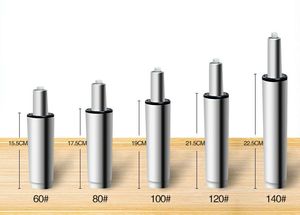
Inside the steel tube is a sealed chamber of compressed nitrogen and oil, with a piston rod running through it. Press the lever and a valve opens: gas pressure pushes the piston up and the seat rises. Sit down and release the lever, and the seat descends. Because the tube holds pressurised gas, it must resist bending and contain pressure safely at the same time. Three specifications matter most: stroke length, load capacity and pressure class.
3.The Four Classes at a Glance
Gas lifts are graded by tube wall thickness, steel grade and internal pressure.
Class 1 uses a thin wall and low pressure. It suits occasional-use chairs only and is rarely found in export products today.
Class 2 is the common entry level: 80–100 kg typical load, suitable for light home office use, and the minimum acceptable standard for student or children's chairs.
Class 3 is the mainstream standard for serious office seating. Thicker tube, higher pressure, roughly 120–150 kg, and it passes tougher cycle and impact testing. For most B2B office chair orders, Class 3 is the sensible starting point.
Class 4 is the top tier: thickest wall, highest pressure rating, 150 kg and above, and the longest service life. It is standard on premium ergonomic chairs and nearly all gaming chairs.
4.What Actually Changes Between Classes
Three things change as you move up a class. First, load safety margin — a Class 2 lift rated at 100 kg is not right for a user of 100 kg, because the rating is a limit, not a working target. Second, service life — a good lift should exceed 100,000 full cycles, and thicker tubes hold pressure consistency far longer. Third, adjustment feel — Class 3 and 4 lifts return more slowly and smoothly, without the sudden drop cheaper units develop after a year.
Prices differ by only a few cents to a few dollars per unit. The difference in warranty claims is far larger.
5.How to Choose and How to Verify
Match the class to the chair's real duty cycle, not to its price point. A 24-hour control room chair and a guest chair used twice a week do not need the same lift.
Ask for test data rather than catalogue claims. Check wall thickness tolerance, cycle test count, static load and impact test results, salt-spray hours for the plating, and whether the cone and taper meet standard fit dimensions. Confirm the lift carries a recognised certification mark and that the supplier can trace the steel batch. A cheap lift that fails in the field costs far more than the few cents it saved.
If you'd like help spec'ing a chair program by gas-lift class, our team will provide this service for you. start a conversation through our contact page, or drop us an email at rj3@chinarenjie.com.